 Nicaragua
 officially withdraws from the Central American Parliament effective immediately after diplomatic friction
 Costa Rica
 Uruguay

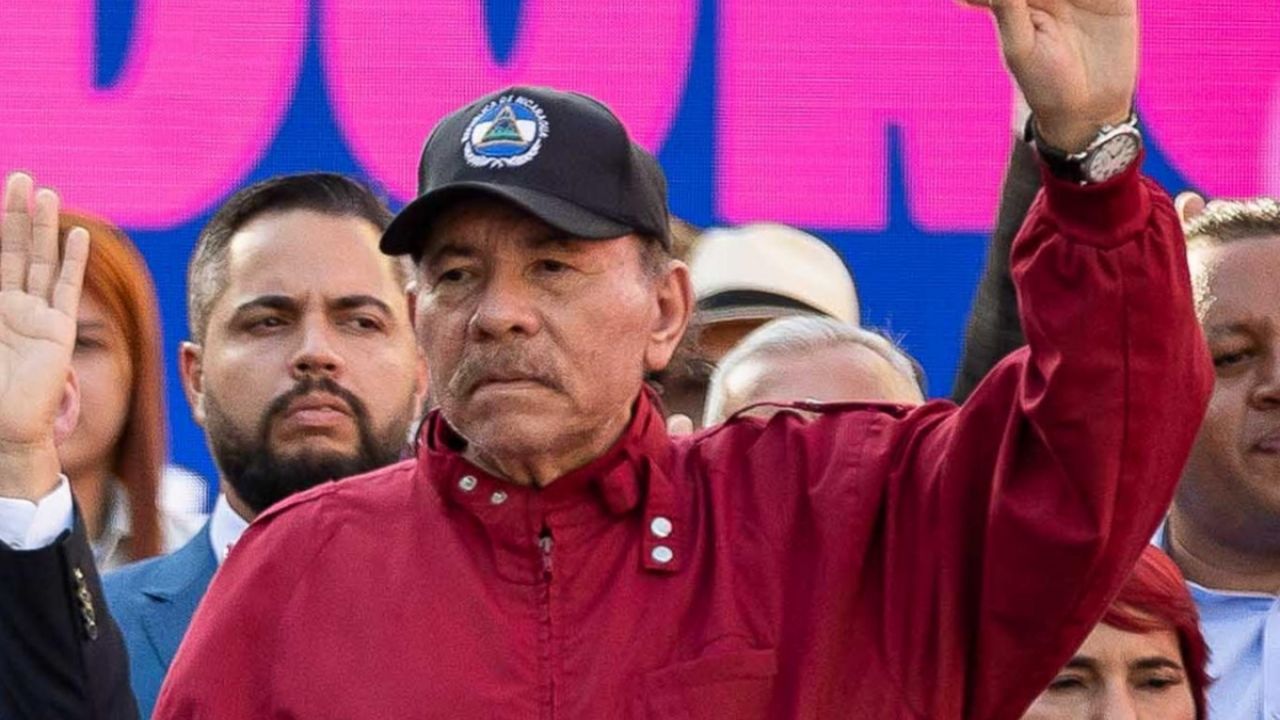
MANAGUA — The government of Nicaragua announced on October 3 that it is withdrawing from the Central American Parliament (Parlacen), effective immediately. The Ministry of Foreign Affairs communicated the decision to both the regional body and the government of Guatemala, describing the move as a full exercise of the country’s national sovereignty.
The government provided no further explanation for the sudden exit, which follows a period of increasing diplomatic friction. The announcement came one day after an extraordinary meeting of the Organization of American States (OAS) in Washington, where member states passed a resolution calling on the Nicaraguan government to restore civil liberties, release political prisoners, and establish conditions for free and pluralistic elections.
The regional response to the situation in Nicaragua has varied in focus and tone. In Costa Rica, officials have urged for heightened regional pressure to restore democratic guarantees, framing the current state of affairs as an “authoritarian drift.” Meanwhile, diplomats in Uruguay supported the OAS resolution regarding elections and the release of political prisoners, yet explicitly distanced themselves from language promoted by the United States that sought to characterize the Nicaraguan situation as a hemispheric security threat, fearing such framing could justify external intervention.
This withdrawal is the latest in a series of moves by the Nicaraguan government to decouple from international and regional institutions. In May 2025, the government initiated a process to withdraw from UNESCO, a decision prompted by the organization’s choice to award the Guillermo Cano World Press Freedom Prize to *La Prensa*, an independent newspaper that has operated from exile following sustained government crackdowns on domestic media.
The current diplomatic shift occurs amid a broader hardening of internal policies. In September 2025, the government oversaw the expulsion of 135 political prisoners, who were sent to Guatemala after having their assets confiscated and their nationalities stripped. More recently, on September 3, 2026, the National Assembly moved to approve constitutional reforms that bar opposition figures labeled as “traitors” from standing for election and extended presidential terms to seven years.
These legislative and diplomatic actions mirror the pattern established in previous years, where the government has leveraged its control over state institutions to centralize authority and silence dissent. As the government continues to restrict the domestic political space, its exit from Parlacen removes a long-standing, if largely consultative, forum for regional interaction.
The decision leaves Nicaragua further isolated from the formal regional structures that have historically mediated relations between Central American neighbors. As of October 4, there has been no immediate statement from the Parlacen secretariat regarding the technical or legal implications of an “immediate” withdrawal from the treaty, which had served as the primary mechanism for Nicaragua’s parliamentary participation in the region.
Sources
- https://latinus.us/latam/2026/10/4/nicaragua-se-retira-del-parlamento-centroamericano-tras-llamado-de-la-oea-restablecer-las-libertades-186062.html
- https://www.laestrella.com.pa/mundo/nicaragua-anuncia-su-salida-del-parlamento-centroamericano-JG26209066
- https://www.latribuna.hn/2026/10/03/nicaragua-denuncia-tratado-del-parlacen-anuncia-su-salida-con-efecto-inmediato/